AI PLG Teardown: Runway
AI PLG Teardown: a series on how AI products onboard new users and where they ask for money. Each teardown answers the same six questions and ends with a scorecard and one fix.
In short: Runway put a referral code, a survey and an upgrade prompt in front of me before I'd made anything, and the video I came for wasn't on the free plan. I left without seeing the product work. Runway already pays affiliates $15 per new user. Spending that on every new user's first video would be the best marketing it could buy.
One post a month on pricing, growth and product. No spam, unsubscribe anytime.
What happened when I signed up
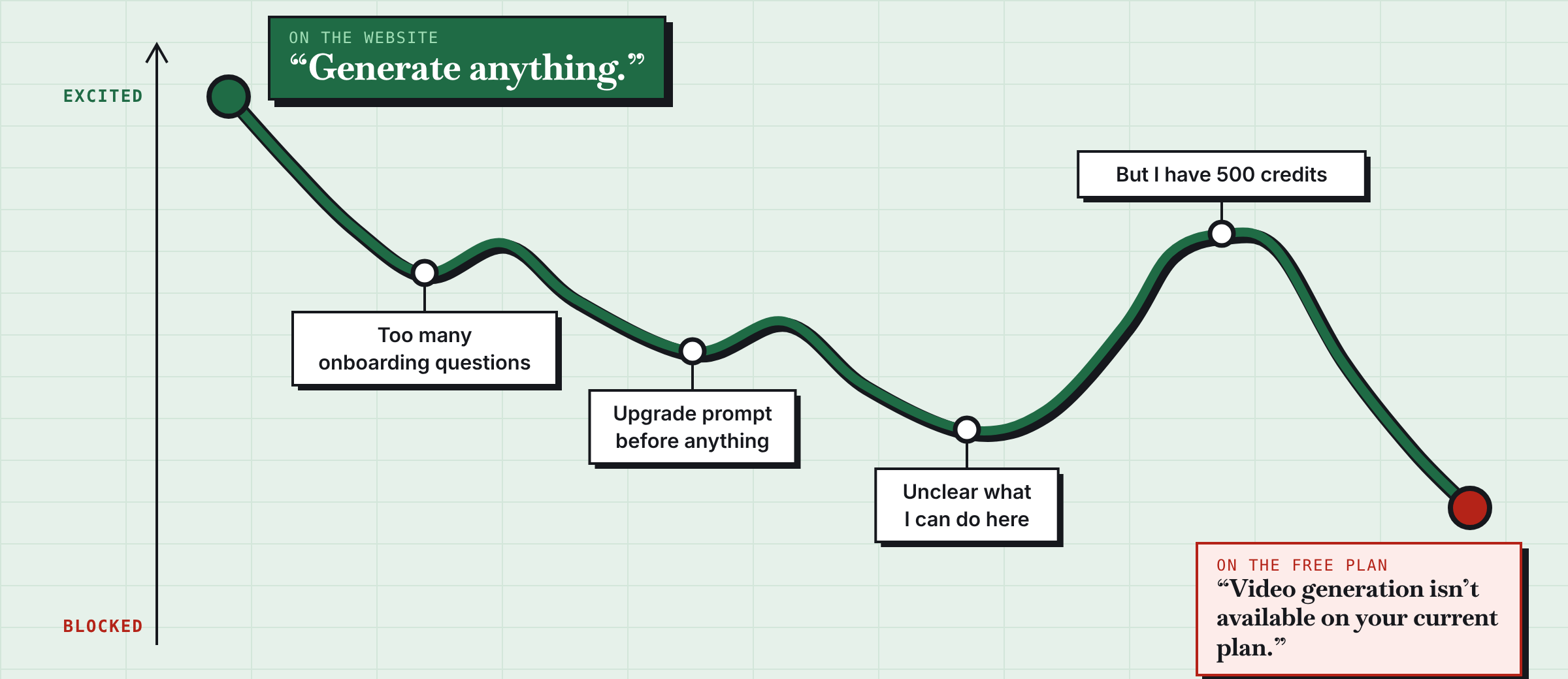
I wanted a short teaser video for my advising business, built from my website: the job Runway is known for.
1. A referral code first. A prominent code field on the first screen told me a deal existed. My instinct was to find someone with a code, a sales-led reflex in what should be a self-serve flow.
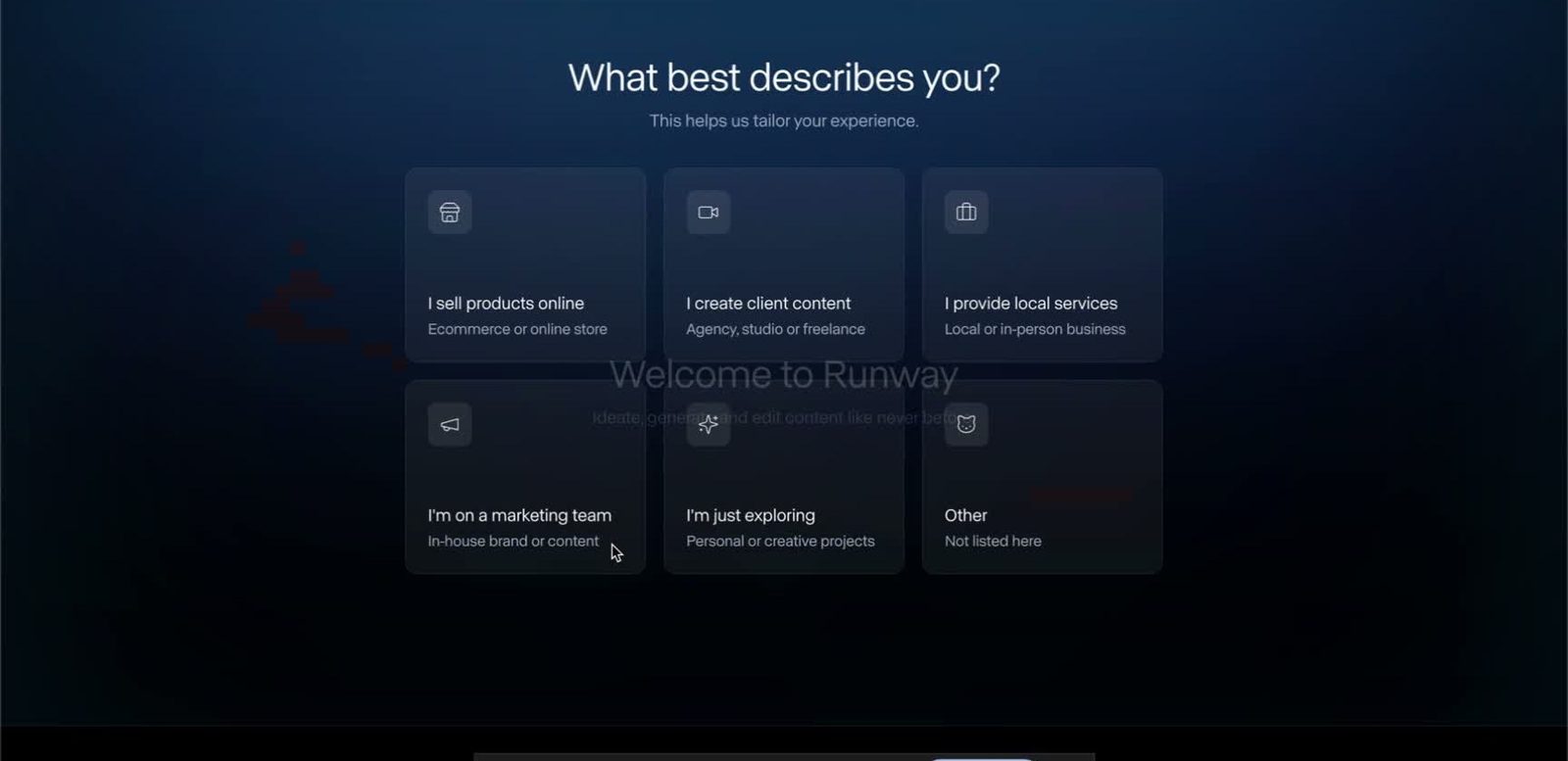
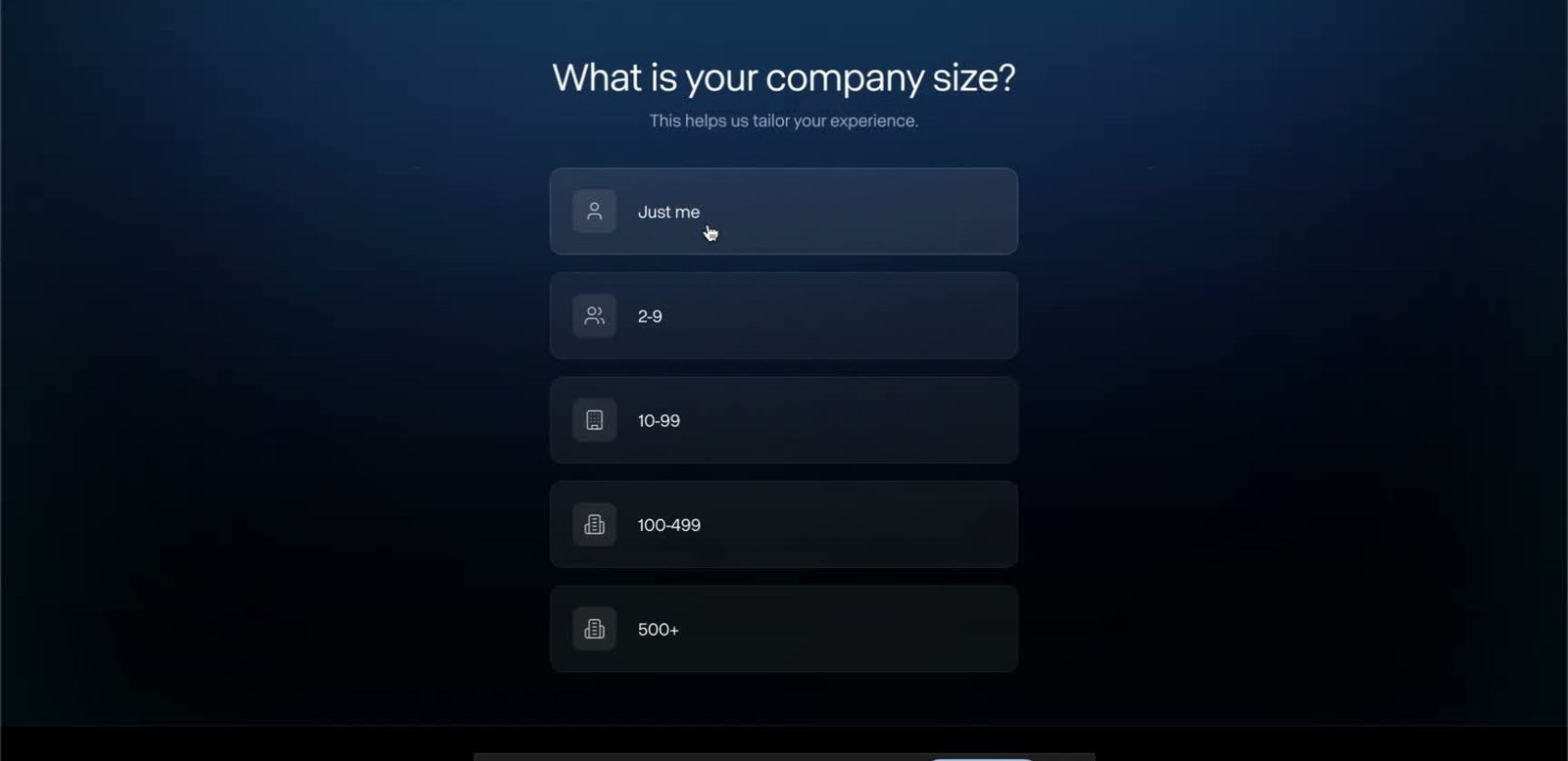
2. A survey before the product. Two screens of questions, and my answers didn't change what I saw next. They were for Runway, not me.
3. An upgrade prompt before any value. Paid plans before I'd made anything turn the upgrade into a toll. Upgrades work when they unlock more of something you already like.
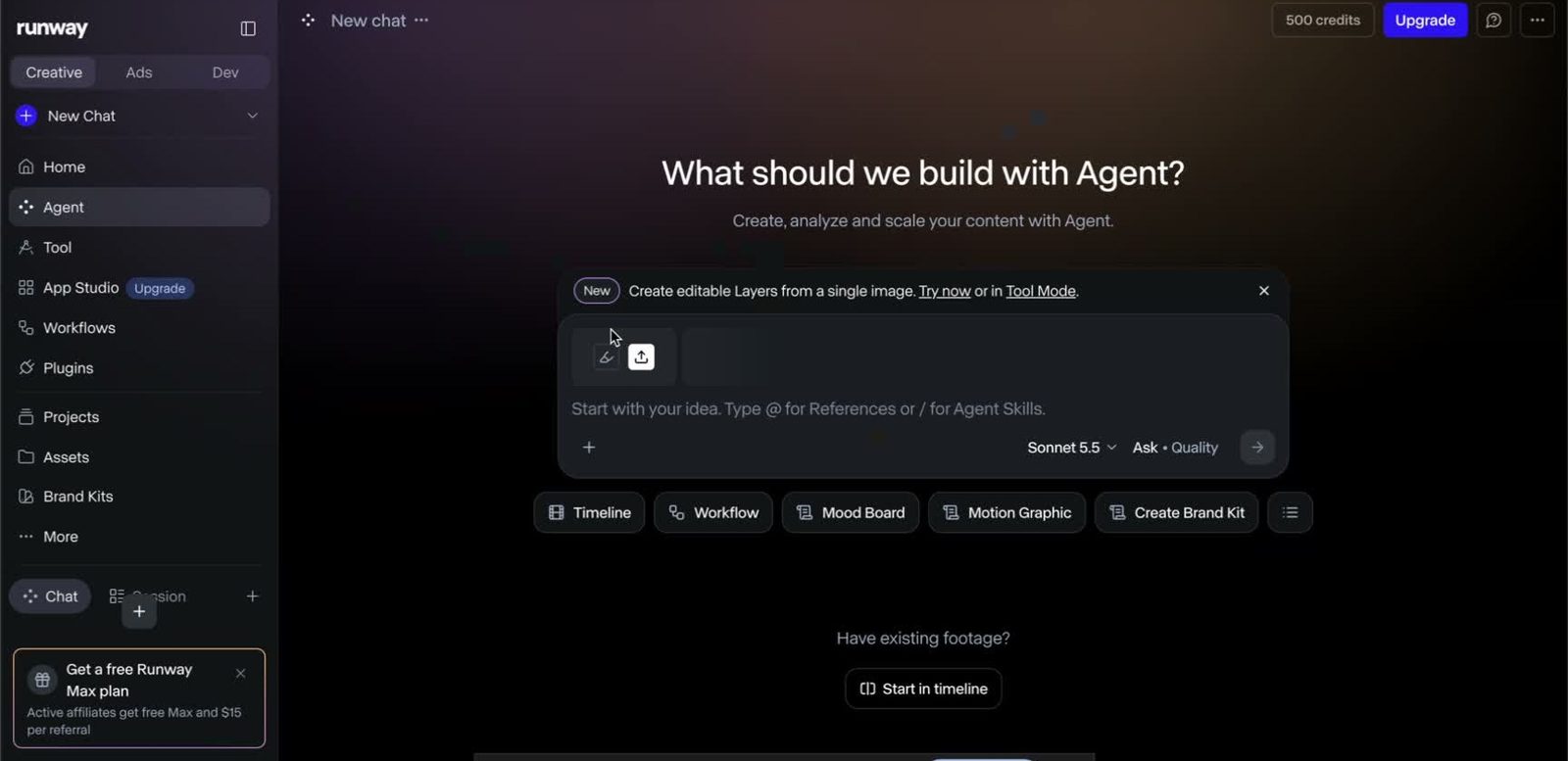
4. An open invitation that hides the limits. "What should we build with Agent?" invited any request, with no hint that video wasn't on my plan. Around it sat a long menu (Workflows, App Studio, Plugins, Brand Kits and more) with no explanation of what any of it does. Every option should answer two questions: what is it, and why should I use it?
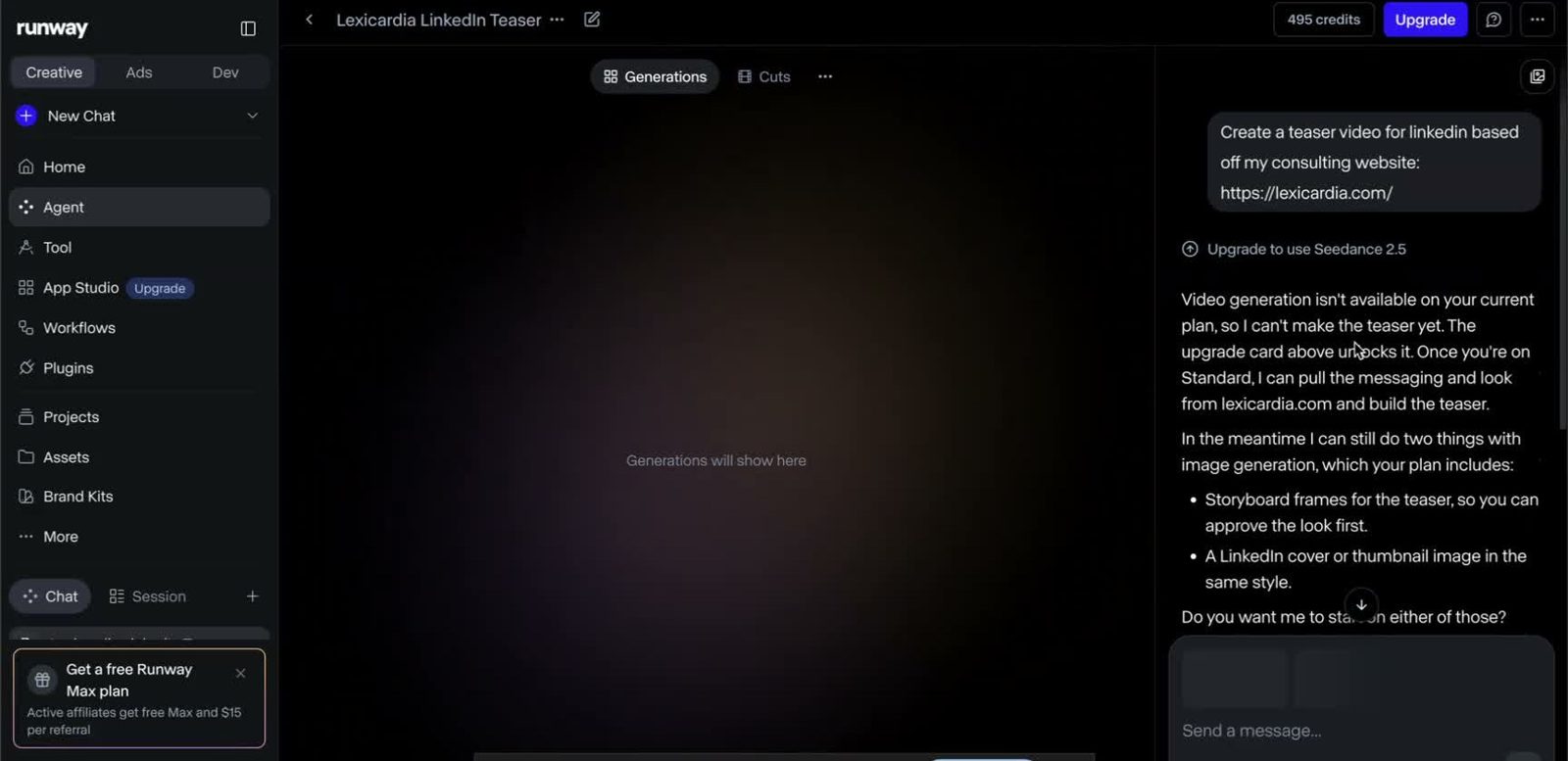
5. Blocked. I asked for a teaser video. I had 500 free credits, but video wasn't available on my plan. The agent explained and offered still images instead. I uploaded my logo and a portrait and asked again: video, even from still images, needs the Standard plan. I never saw Runway work on my problem.
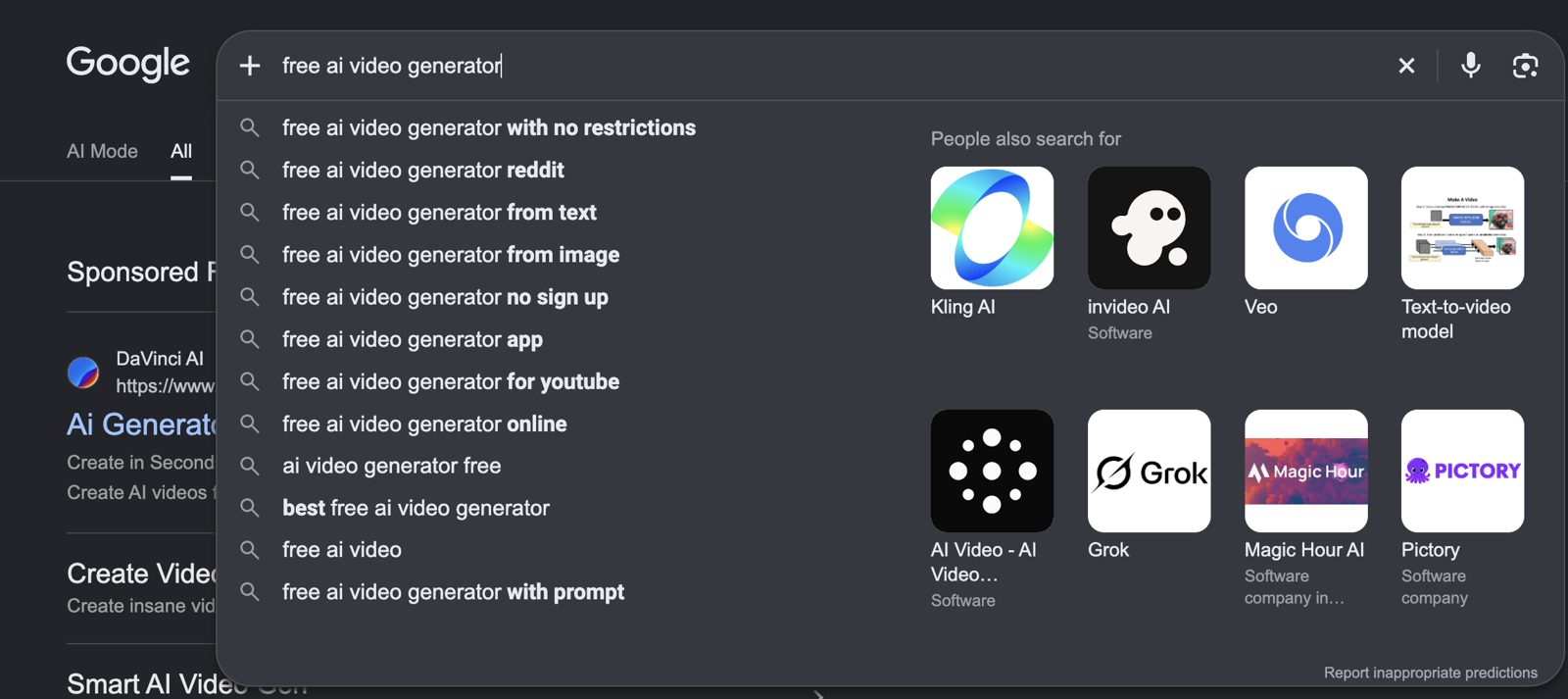
6. One search away from a competitor. I searched for a free AI video generator. Google suggested "no sign up" and "with no restrictions" and listed Kling, invideo, Veo, Pictory and more. Runway wasn't among them. Runway had my attention and my account, and the paywall handed both to competitors.
My note to myself afterward: I'm not paying a monthly fee until I see value. This isn't unique to Runway. AI content companies often charge before the "aha," even for prosumers who'd pay once they've seen it work.
AI wasn't an easier way in
Since signup failed, I tested whether AI could recommend and set up Runway instead. I asked Claude, ChatGPT and Gemini: "What's the best AI tool to make a short teaser video for my consulting website? I'd like to try it free first."
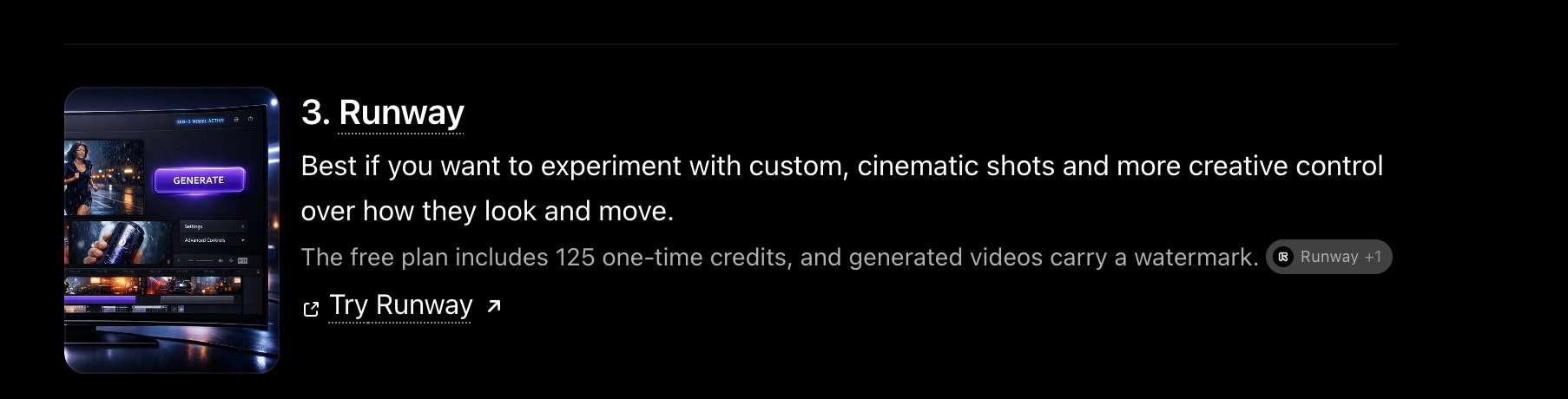
- ChatGPT listed Runway third and said its free plan includes watermarked videos.
- Claude mentioned it only as a maybe for background footage.
- Gemini didn't mention it.
Setup was harder still. Runway has an MCP server that lets AI assistants use it directly, but there's no ready-made connector in Claude. Claude suggested adding a custom connector by pasting in a server address: a developer's setup, not a prosumer's onboarding. The products that win in AI will be the ones AI can recommend, set up and use in the same conversation.
The free plan should be the marketing budget
Video generation is expensive, so I understand the caution. But Runway draws the wrong conclusion. For a video company, the most convincing ad is a great video of the customer's own idea.
Runway already pays affiliates $15 per new user. At Runway's own API price, $15 of its lower-cost video model, Gen-4 Turbo, is about five minutes of video. My 10-second teaser would have cost about 50 cents. The 500 credits I already had would have covered ten of them, at list prices well above Runway's actual compute cost.
Ways to keep that taste affordable:
- Short: a 5 to 10 second version of what the user asked for.
- Cheaper models: keep the newest models for paid plans.
- Watermarked and lower resolution, so free shows the value without replacing paid.
Then the upgrade is about more: longer videos, better models, no watermark and commercial use.
The scorecard
| Question | Runway | Grade |
|---|---|---|
| Discovery by AI | Third in ChatGPT, absent in Gemini | 🟡 Partial |
| Setup in a conversation | Custom connector only | ❌ Fail |
| Time to first value | Never reached | ❌ Fail |
| Teaching in the moment | Explained only after I asked | 🟡 Partial |
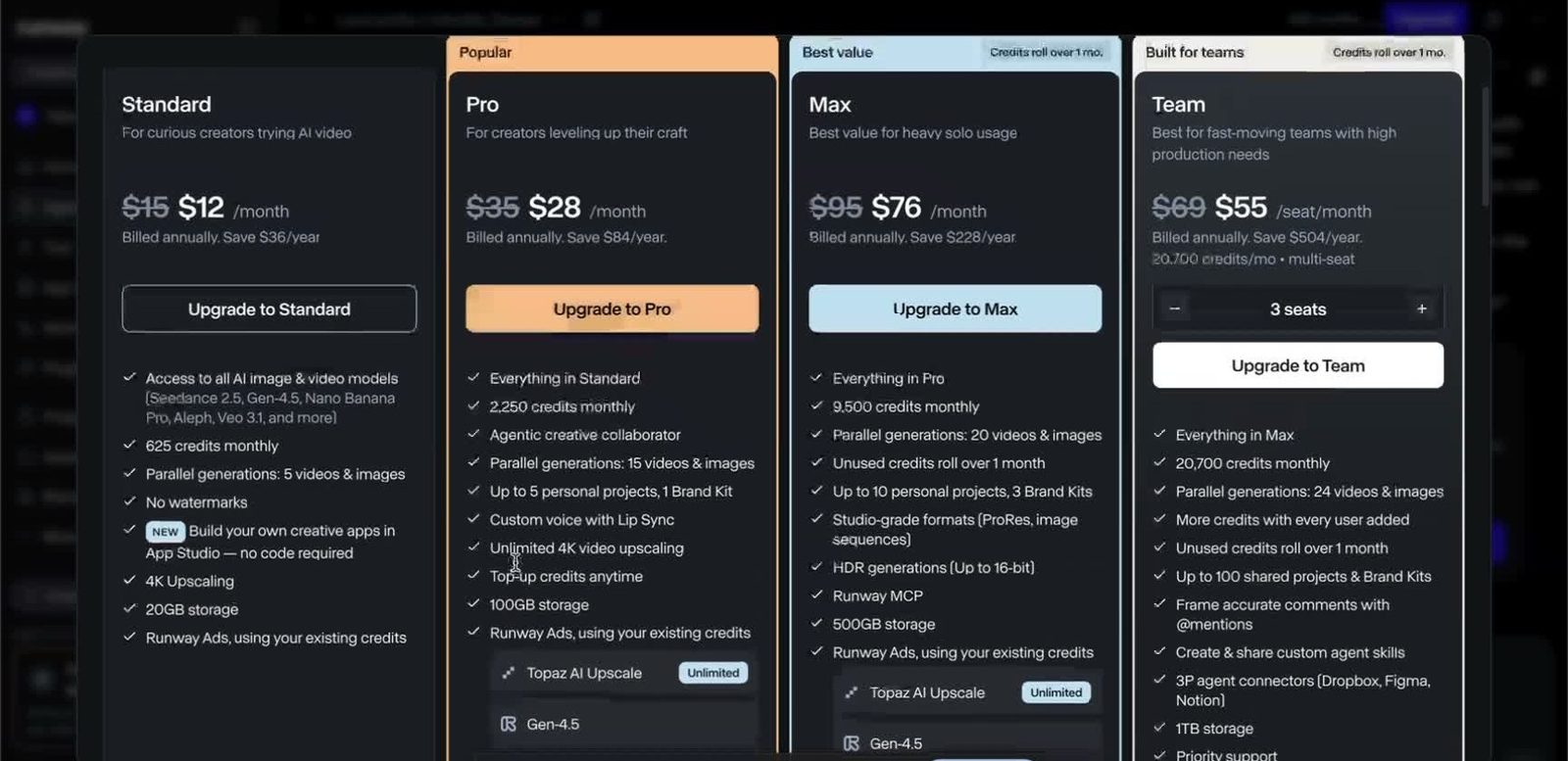
| Free plan and upgrade | 500 credits, core job paid only | ❌ Fail |
| Where friction lives | Survey, referral code, menu, paywall | ❌ Fail |
Verdict: not product-led. Runway's onboarding asks for commitment before it earns it.
One fix: let every new user make one short, watermarked video of what they came for before any survey or upgrade prompt, and budget the compute like marketing spend.
Clean up the journey, then re-run the math
Today, a new user gets 500 free credits and no way to spend them on video. The website promises "Generate anything." ChatGPT says the free plan makes watermarked videos. The agent invites any request, then says no. Each piece may have made sense when it shipped, but together they confuse buyers, whether they find Runway through a chatbot or in the product. Walk the whole journey, from the first AI recommendation to the first video, and make every step tell the same story about the free plan.
Then re-run the economics of free until they work for both sides. Someone who shows up ready to buy is the most valuable attention you'll get. Don't waste it on an early paywall.
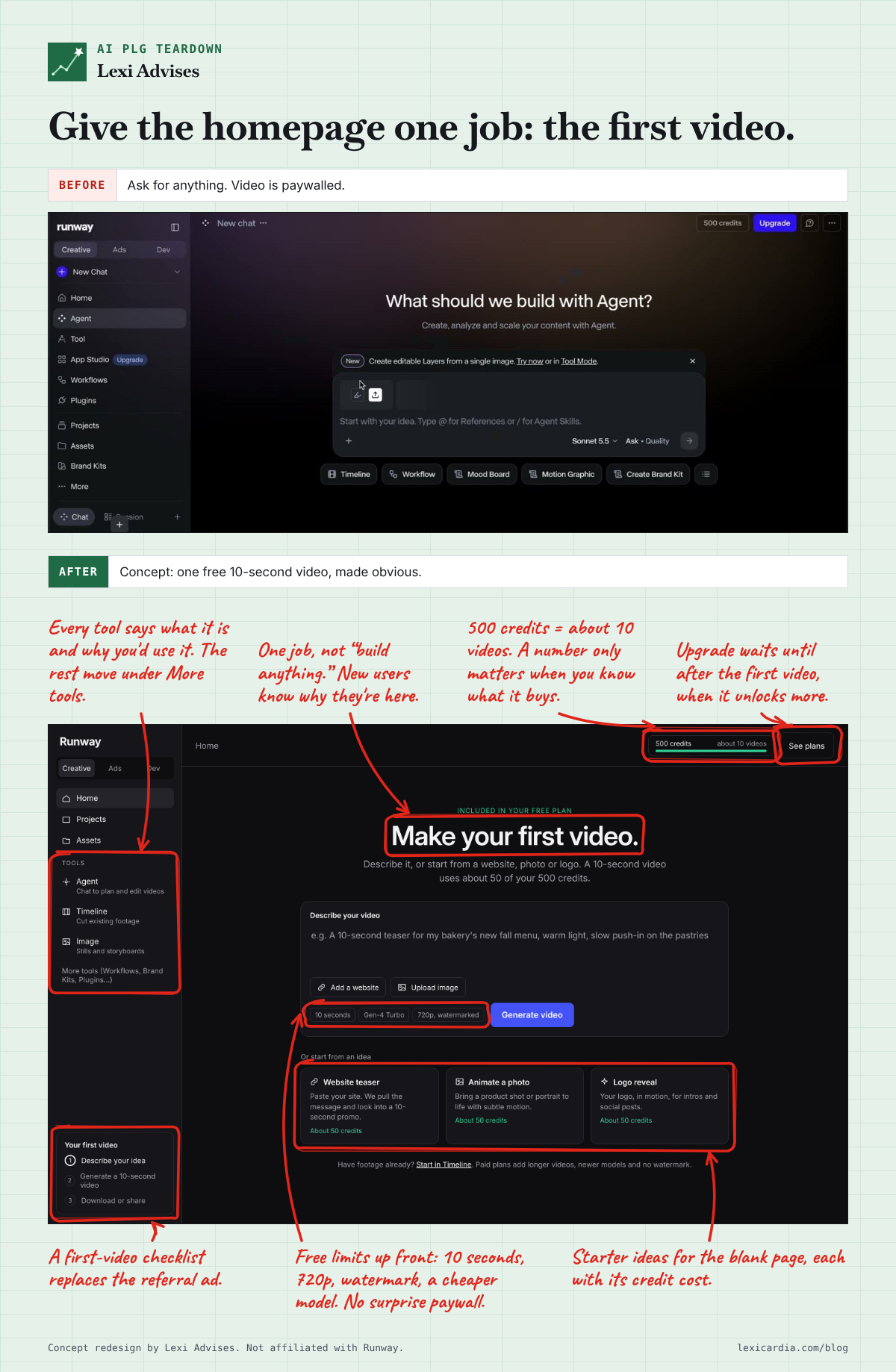
What the homepage could look like
I redesigned Runway's homepage around one job: making the first video. Same layout, same agent. The real change is letting the free plan make video. Each red note explains a change and why.