Stop asking for features. Start sharing outcomes.
In short: Instead of asking your product team for specific features, give them a measurable business outcome, like growing enterprise ACV, and let them decide what to build. It builds a team that thinks for itself, and it matters more now that AI makes building cheap and deciding what to build is the real constraint.
Most founders I work with manage product the same way at some point: they ask for specific features. A customer mentions a gap on a call, the founder brings it back to the product team, and it lands on the roadmap.
This works for a while, and for good reason. Early on, the founder is usually the person closest to customers. They hear the objections, they sit in the deals, and their instincts are often right.
But it doesn't scale, and it doesn't build a team that can think for itself.
One post a month on pricing, growth and product. No spam, unsubscribe anytime.
How do you manage a product team by outcomes?
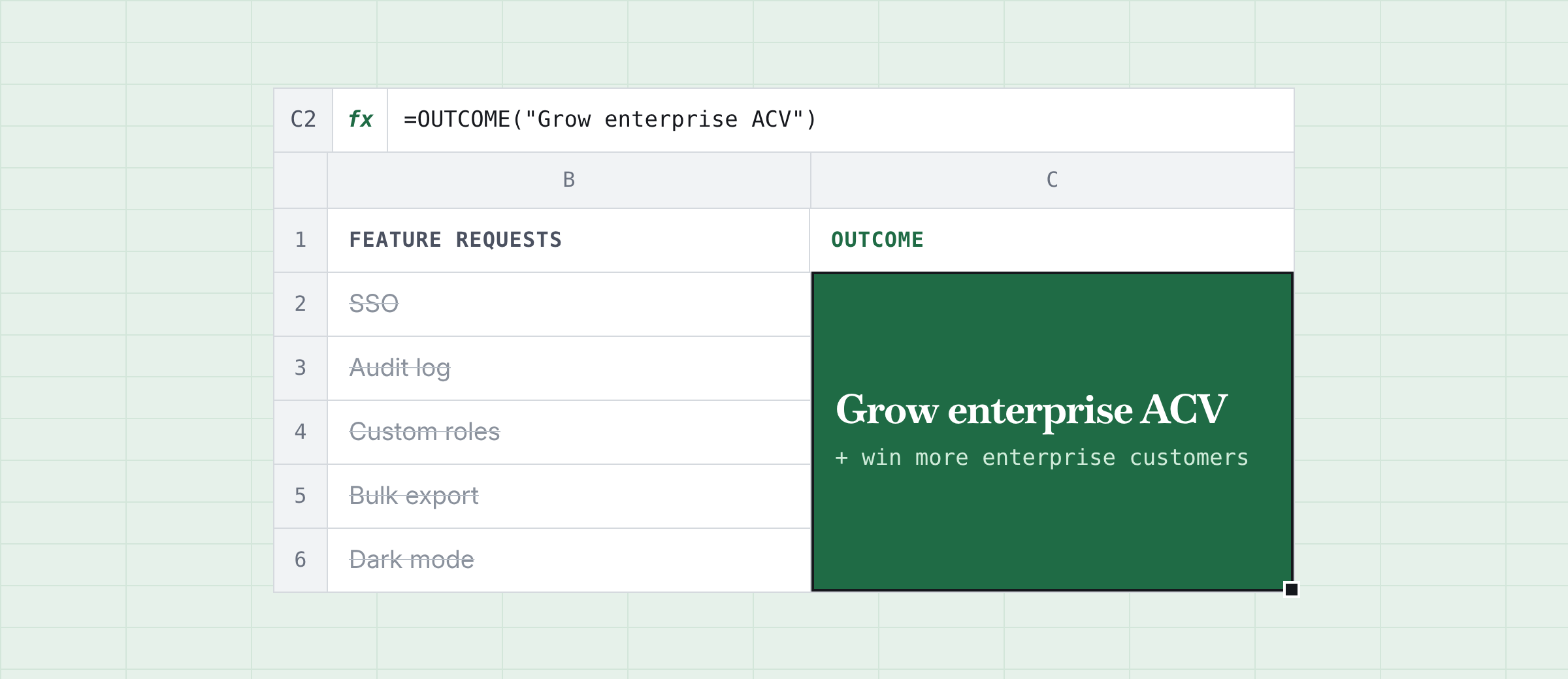
Instead of "we need SSO and an audit log," try "this year, we need to grow enterprise ACV and win more enterprise customers."
That one shift changes the job of your product leader. They're no longer translating a list of requests into tickets. They're designing a roadmap to move a business result. They can look across sales conversations, usage data and churn reasons, weigh trade-offs, and decide where innovation will have the biggest impact. Sometimes that's the feature you would have asked for. Sometimes it's something you wouldn't have thought of, like packaging, onboarding for larger teams, or admin controls that make a security review go faster.
Your customer insight still matters. It just becomes an input to the plan rather than the plan itself. And the whole product roadmap isn't on your shoulders, so you can work across the business.
Why do outcomes matter more with AI?
With AI, teams can build more, faster, than ever before. That's a gift, but it comes with a trap. When building is cheap, the real constraint is deciding what's worth building.
Without a clear objective, much of what gets shipped won't move the business forward. Worse, every extra feature adds weight to the product. Menus get longer, settings multiply, and the experience gets harder to learn. A cluttered product degrades the experience for everyone, including the customers you were trying to win.
A clear outcome is the filter. It gives your team a simple question to ask of every idea: does this move the goal?
How do you set outcomes for each product manager?
This doesn't stop at the founder and product leader. The best product leaders apply the same approach to their own teams.
Give each product manager a measurable outcome for their area of ownership, like raising trial-to-paid conversion, increasing expansion revenue from existing accounts, or cutting time to first value for new users. Then let them figure out how to get there.
Two things happen when you do this:
- Accountability goes up. Success is defined by results, not by shipping. A launch that doesn't move the number isn't the finish line and your product will be better for it.
- Autonomy goes up too. People closest to the problem get to choose the solution. That's more motivating for them, and usually produces better answers.
It's the ultimate business alignment tool. Everyone from the founder to the individual product manager is pulling toward the same results, and each person has room to contribute their best thinking.
How to get started
- Pick one to three outcomes for the quarter or year. More than that and nothing is a priority.
- Make them measurable. "Grow enterprise ACV from X to Y" beats "move upmarket."
- Share the why. Explain the business context behind each goal so the team can make good calls without you in the room.
- Bring customer insight as input, not instructions. Share what you're hearing, then let the team decide what to build.
- Review outcomes, not output. In check-ins, ask what moved and what the team learned, not just what shipped.
Founders don't have to give up their customer instincts to do this. They just have to point their team at the destination instead of the specific route and then share input along the way. This builds leverage to be a more effective leader of your whole business.